Fort Myers, FL · Garage Door Service
The Garage Door Your House Was Built With
Most Fort Myers garages went up between 1970 and 2006, before insulation codes tightened. Here's what that means for the single-layer steel door on your house today.
- Repairs & new doors
- Springs & openers
- Serving 7 nearby communities
What the Weather Here Does to It
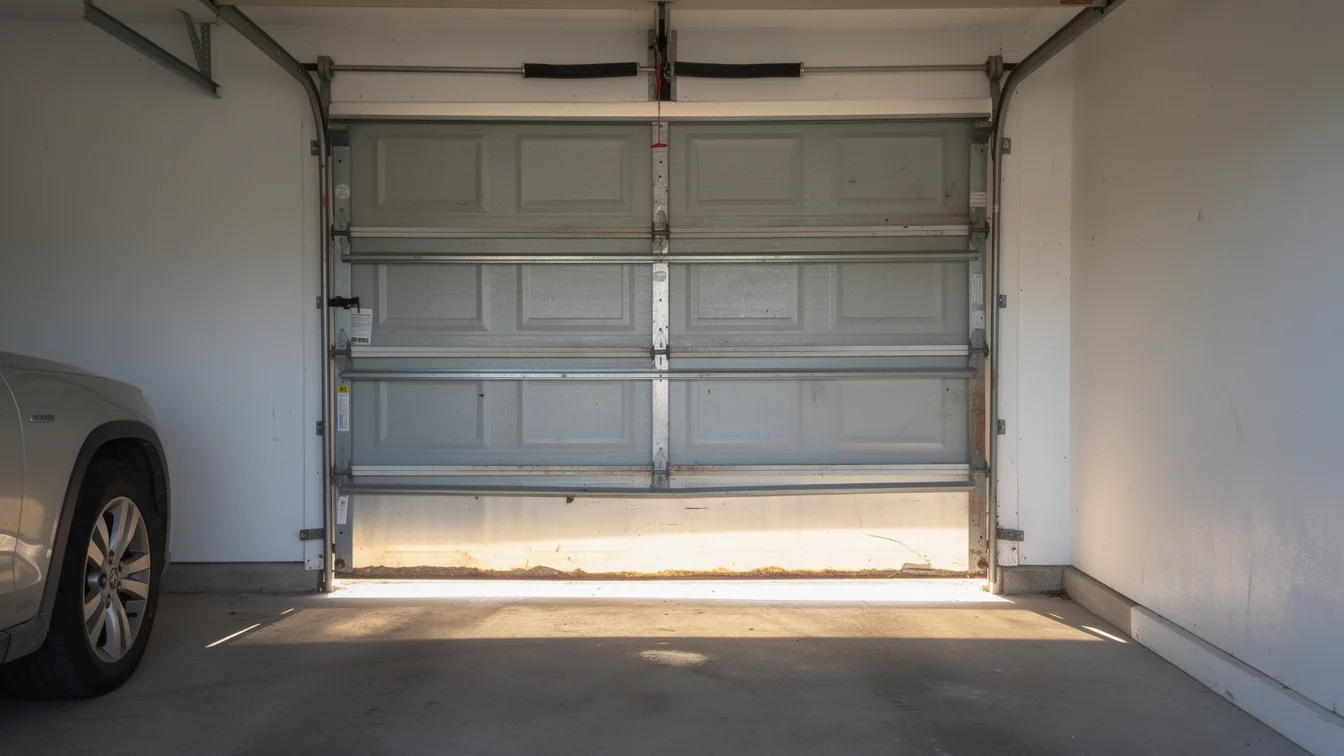
Fort Myers sits in a mild temperate band, so you're not fighting hard freezes or deep cold the way a door in the Midwest does. What you're fighting instead is sun load and humidity, day after day, year after year. A single-layer steel or aluminum door, the kind that was standard when most of this area's housing went up between 1970 and 2006, has nothing between the outside skin and the inside of your garage. It absorbs afternoon heat directly, and that metal expands unevenly across the panel. Over enough years that shows up as a slight bow in the middle sections, a door that binds in the tracks on the hottest part of the day, or hardware that's worked loose because the panel keeps flexing. Humidity does its own damage underneath, at the bottom panel and the hardware, where condensation sits against bare steel with no barrier. None of this is dramatic. It's slow, and it's the reason a 1986-era door (the median build year across this area's housing stock) often looks fine from the driveway but doesn't move the way it did ten years ago.
Checking It Yourself
Open your door and look at the back of a panel. If you see bare steel ribbing with nothing behind it, no foam, no backer board, you've got the uninsulated construction that was normal across the 1980s and 90s stock in this area's 22 named neighborhoods. Run your hand along the bottom seal on a hot afternoon. If the metal above it is noticeably warmer than the rest of the garage wall, that's the door doing exactly what an uninsulated panel does. Next, watch the door move through a full cycle. A slight shudder or a point where it seems to catch, then release, partway up usually means a panel has started to bow slightly from heat cycling rather than a track or spring problem. Check the corners of each panel for small stress cracks in the paint, especially on the side that catches the most afternoon sun. None of these checks require tools. They just require actually looking at a door most people haven't looked closely at since it was installed.
What Most People Get Wrong
The assumption we hear most is that insulation is a cold-weather concern, so it doesn't matter here. That's backwards for this climate. In a mild temperate area like Fort Myers, the issue isn't keeping heat in, it's that an uninsulated steel panel has no mass to buffer the heat and humidity swings, so it flexes more over its life than an insulated one would. The second thing people get wrong is treating a warped or sticking panel as a spring or opener problem and paying to have those adjusted, when the panel itself is the thing that's moved. A tech can true up a track or retension a spring, but if the door's center section is physically bowed from twenty-plus years of heat cycling, that adjustment won't hold. The third mistake is assuming a house built in the 1980s or 90s, which describes most of the stock in this area, automatically has an insulated door because the house itself does. Garage doors were rarely covered by the same standards as the rest of the structure.
The Problem
Here's the honest version: there was no insulation requirement on garage doors when most of this area was built out, from 1970 through the mid-2000s with a median around 1986. Builders used whatever single-layer steel or aluminum door was cheapest and code didn't ask for more. That's true whether the house is near Tice, Whiskey Creek, or further out toward Buckingham or Gateway. So the door on an original 1980s or 90s build is doing thirty-plus years of heat and humidity cycling on bare metal, and by now a lot of those doors are bowed, pitted, or running hardware that's loose from the flexing. We'll be straight about the limitation: retrofitting insulation onto an old warped panel doesn't fix the warp, it just adds weight to a door that's already out of true. Past a certain point, replacement is the real fix, not a patch. We can tell you which side of that line your door is on without guessing.
Frequently asked questions
Is my garage door supposed to be insulated?
Not necessarily. If your house was built between 1970 and 2006, which covers most of this area, there was no code requirement for an insulated garage door. A single, uninsulated steel or aluminum panel was standard. It's not a defect, it's just the construction norm for that era.
Why does my door only stick in the afternoon?
Heat. An uninsulated panel absorbs direct sun and expands unevenly, which can make a bowed section catch in the track during the hottest part of the day and release once things cool. If it only happens on hot afternoons, look at the panel itself, not just the track or opener.
Should I just add insulation to my old door?
Depends on the door's condition. If the panels are still flat and true, a retrofit kit can help. If the panel has already bowed from years of heat cycling, adding insulation adds weight to a door that's already out of shape, and it won't straighten it. At that point replacement is the more honest answer.
Does the humidity here actually damage the door, or just the hardware?
Both, but differently. Humidity sits against bare steel at the bottom panel and hardware points where there's no insulation backing to buffer it, which is where we most often see pitting and corrosion start on older uninsulated doors in this area.
Related garage door services in Fort Myers
More garage door guides
Book garage door service in Fort Myers
Call now or request a quote - tell us what the door is doing and where you are.