
Fort Myers, FL · Garage Door Service
Why Garage Door Seals Fail in Fort Myers Homes
Why bottom seals and side weatherstrip fail early on 1970s-2006 Fort Myers garage doors, what the mild coastal climate does to the rubber, and how to check yours before the draft gets worse.
- Repairs & new doors
- Springs & openers
- Serving 7 nearby communities
What the Weather Here Does to It
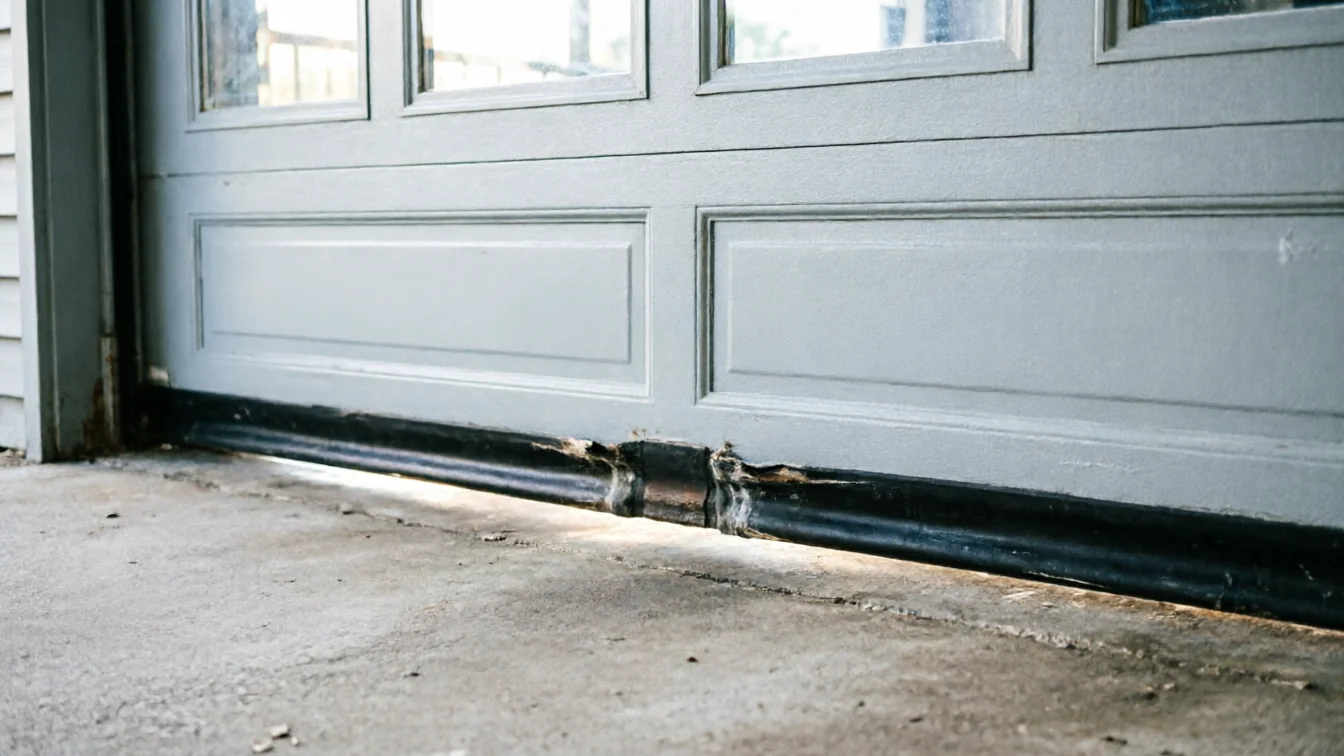
This area sits in a mild temperate band, which sounds like good news for a garage door, and in one way it is: there's no freeze-thaw cycle here to split a seal the way it does up north, no ice working into a crack and tearing the rubber apart overnight. That's not what kills seals in Fort Myers. What kills them is UV and humidity cycling, day after day, for years. The bottom seal bakes in direct sun for a chunk of the afternoon, softens, cools at night with the humidity swing, and over time the rubber goes from pliable to stiff to cracked. Side and top weatherstrip fares a little better since it's usually shaded by the frame, but it still dries out and starts pulling away from the track over time. If your house falls into the 1970-2006 build window that covers most of this service area, with the bulk of that stock going up in the 1980s and 90s, you're likely on either the original seal track or a replacement that's itself aging out. The draft you're feeling isn't a design flaw. It's rubber doing exactly what rubber does in this climate after enough seasons.
Checking It Yourself
Close the door and walk the perimeter from inside the garage with the lights off, ideally in daylight. Any line of light along the bottom or sides tells you where the seal has pulled away or compressed flat. Press a thumbnail into the bottom seal - if it dents and springs back, it's still doing its job. If it feels stiff, cracked, or crumbles a little at the edge, it's done. Check the corners first; that's where seals fail fastest because the rubber has to flex around the frame return and it's the first spot to dry out. Run a hand along the bottom of the door on a breezy day and feel for air movement at the slab, not just at the seal - a warped panel will let air through even with a perfect seal, and that's a different problem. Also look at the astragal, the seal strip itself, not just where it meets the floor; a seal that looks fine lying flat can still have gaps at the ends where it was cut short during an old install. None of this takes more than ten minutes, and it tells you whether you're looking at a seal job or something bigger.
What Most People Get Wrong
The most common mistake is assuming a seal only matters for keeping cold out, so if the house never freezes, it doesn't matter much. In a mild temperate climate like this one, the seal's real job is keeping rain, pollen, and small pests out, and keeping the slab dry enough that the bottom of the door and the floor track don't stay damp. A failed seal here shows up as a damp line on the garage floor after a storm, not a frozen door. The second mistake is replacing only the bottom seal and ignoring the side weatherstrip, because the bottom is what people notice first. If your house is in that 1980s-90s stock that makes up most of this area, the side strip is usually original too, and it ages at the same rate even though it's less visible. The third mistake is buying a universal seal kit sized for a different climate's extreme-cold rubber compound, which goes stiff fast in sustained heat and UV rather than flexing. A seal rated for this climate band holds up considerably longer than one built for a cold-weather market.
The Problem
Across this service area, roughly 39,416 owner-occupied houses sit on housing stock built mostly between 1970 and 2006, with the median landing around 1986. That means a large share of garage doors are either on original hardware or a first-generation replacement that's now old enough to be failing the same way. The seal is cheap and quick to replace. The harder problem is when the draft isn't the seal at all - it's a door that's racked slightly on its track, or a panel that's bowed from years of sun exposure, so no new seal will sit flush against it no mater how well it's installed. That's worth saying plainly: we won't sell you a seal replacement if the real issue is a misaligned track or a warped panel, because the gap will come back within a season and you'll have paid twice. If the slab itself is the problem, that's a separate repair, and sometimes replacement makes more sense than chasing a seal that keeps failing.
Frequently asked questions
How often does a garage door seal need replacing in Fort Myers
There's no fixed interval in our records, but seals exposed to direct afternoon sun on a bottom-facing edge typically show cracking and stiffness well before side weatherstrip does, given the UV and humidity cycling common to this climate band. Check it yearly rather than waiting for a visible gap.
Why do I feel a draft even with a new seal installed
If the seal is new and you still feel air movement, the slab or track is usually the real issue - a door that's racked, a bent track, or a panel bowed from sun exposure won't seal flush no matter how good the rubber is. That's a separate repair from a seal swap.
Does the humidity here cause more seal damage than cold climates
In a mild temperate climate without freeze-thaw cycling, the damage pattern is different, not necessarily less. UV exposure plus repeated humidity swings dries and stiffens rubber over time, which is why seals here often look fine until you press on them and find them brittle.
Related garage door services in Fort Myers
More garage door guides
Book garage door service in Fort Myers
Call now or request a quote - tell us what the door is doing and where you are.