
Fort Myers, FL · Garage Door Service
What That Sound Coming From Your Door Is Actually Telling You
What squeaks, grinds, and bangs actually mean on a Fort Myers garage door, tied to the 1970-2006 housing stock and mild coastal climate here.
- Repairs & new doors
- Springs & openers
- Serving 7 nearby communities
What the Weather Here Does to It
Fort Myers sits in a mild temperate band, not a freeze-thaw climate, so you won't hear the cracking-ice sounds that show up up north when a cold snap seizes a track. What you get instead is humidity and salt-laden air working on metal year-round, with no winter cold spell to slow the process down. Hinges and rollers on houses built in the 1970-2006 run that makes up most of this area's stock have had decades of that constant exposure, and it shows up as a steady grind rather than a sudden freeze-up. A door that worked fine last October and now groans through every open cycle is usually telling you the lubricant on the rollers has washed out or gummed up, not that something snapped overnight. Because the weather here doesn't swing hard between seasons, noise tends to build slowly instead of showing up all at once after a storm. That's actually useful - it means a new sound this month is a real change, not seasonal drift, and it's worth paying attention to the first time you hear it instead of waiting for it to get worse.
Checking It Yourself
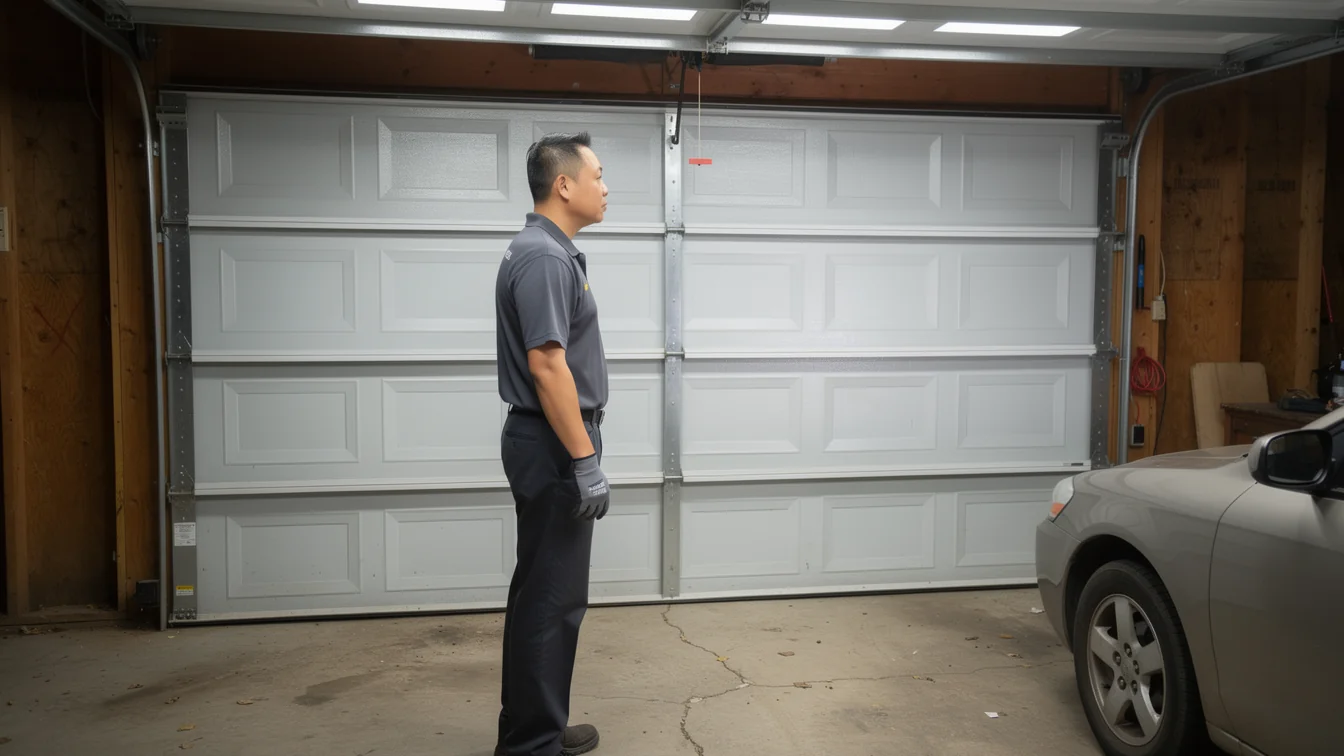
Stand next to the door and run it through one full cycle with the lights off and the radio off. A rhythmic thump on the way up usually means a flat spot on a roller - common on doors original to houses from the 1980s and 90s stock that make up a lot of this area, since the original rollers are plastic and wear unevenly over that many years. A sharp metallic pop, usually once per cycle near the top, points to a hinge working loose where the panel sections join. A low grinding hum that rises in pitch as the door moves is almost always the opener's drive gear or chain needing attention, not the door itself. If you hear a loud bang followed by the door refusing to move, stop - that's a spring, and it's not a DIY fix. Write down roughly where in the cycle the sound happens, top, middle, or bottom, because that location tells a tech more than a description of the sound ever will.
What Most People Get Wrong
The most common mistake here is assuming a quiet door is a healthy door. In this climate, corrosion and dried-out lubricant don't always announce themselves with noise until a part is already close to failing - the humidity works on hardware steadily rather than in dramatic bursts, so a door can go from fine to grinding in a matter of weeks once a roller or hinge crosses a wear threshold. The second mistake is spraying WD-40 on everything and calling it done. That product displaces water short-term but isn't a lasting lubricant for springs or tracks, and on houses built decades ago with original hardware, it can actually wash out what grease is left. The third mistake is waiting for a sound to get loud before calling anyone. A quiet squeak at the top of the cycle on a door that's original to a house from the 1986 median build year is cheap to fix now and expensive once it's let the hinge wear through.
The Problem
Here's the honest limitation: not every noise is diagnosable over the phone, and we're not going to guess at a part number from a description of a sound. A lot of the houses across this service area, including the older sections near Tice and Whiskey Creek, still have original torsion hardware from builds going back to the 1970s, and parts for that era aren't always sitting on a shelf - some jobs mean a short wait on a specific spring size or roller bracket. If your door is making noise and we haven't seen it, we won't tell you it's definitely one thing. We'll tell you what it's likely to be based on where in the cycle it happens and how old the hardware looks, then confirm it in person before anyone touches a spring.
Frequently asked questions
My garage door squeaks only when it's humid out - is that normal?
It's common here. Fort Myers' mild, humid climate works on lubricant and metal hardware steadily rather than in sharp seasonal swings, so grease that's fine in a dry month can thin out or wash away as humidity climbs. If the squeak disappears when you lubricate the rollers and hinges, it's maintenance. If it comes back within days, a part is likely wearing out underneath it.
Is a loud bang from my garage door always a broken spring?
Not always, but a sudden bang followed by the door being hard or impossible to lift is the classic sign of a broken torsion spring. On older homes in this area with original hardware from the 1970s-90s build years, that's a frequent cause. Stop using the opener and call rather than forcing it - a spring under tension is not something to work around yourself.
Why does my opener grind but the door still moves fine?
That's usually the drive gear or chain, not the door itself - a separate wear point from the rollers and hinges. It's common on openers that have been running for many years without the gear being checked, which applies to a lot of houses in this area given how much of the housing stock dates to the 1980s and 90s.
Related garage door services in Fort Myers
More garage door guides
Book garage door service in Fort Myers
Call now or request a quote - tell us what the door is doing and where you are.