Fort Myers, FL · Garage Door Service
New Garage Doors for Gateway's Early-2000s Homes
Gateway homes went up around 2003 with builder-grade steel doors. We swap them for better-insulated doors built for this area's heat and humidity.
- Repairs & new doors
- Springs & openers
- Serving 7 nearby communities
How Long It Takes
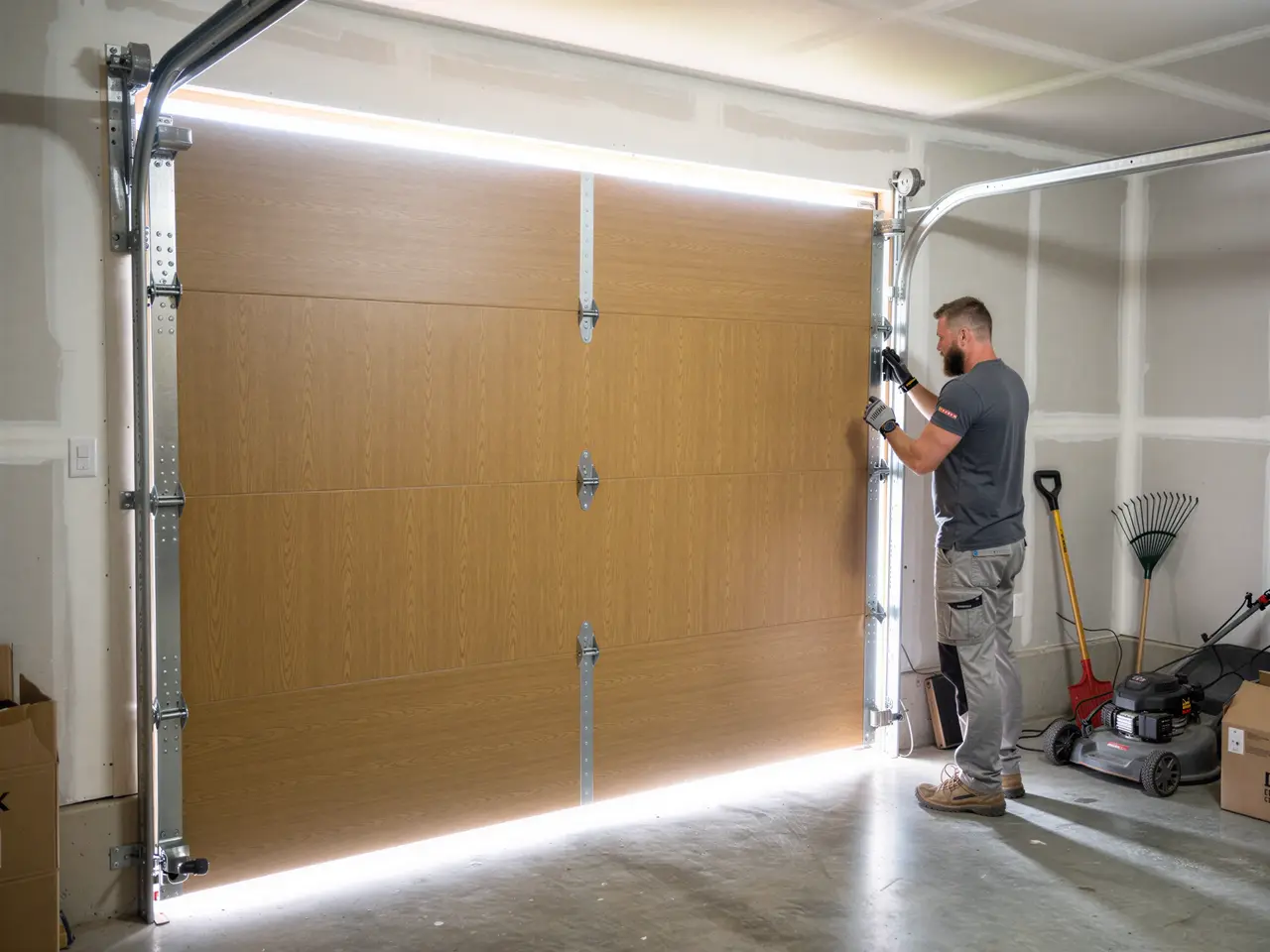
Most of Gateway went up around 2003, which means the garage doors on these houses are builder-grade steel, installed fast and cheap to meet a construction schedule, not to last thirty years. A new install on a house like that is usually a one-day job: old door off, new track and springs set to the opening, new door hung, opener remounted or replaced. If the opening is standard and the framing is square, which it usually is in a neighborhood built all at once in the early 2000s, there's no carpentry involved. Where it runs longer is if the original track was never plumb to begin with, something that shows up more in developments built fast during a building boom than in older, hand-framed construction. We measure the opening before the truck leaves so the door ordered is the door that fits, because a mismeasure means a second trip and a delay waiting on the right size panel.
How It Shows Up
The tell in Gateway is usually a door that still looks fine from the driveway but struggles on the way up, especially midday. Homes built in this window often got a single torsion spring sized for a lighter door than what's actually hanging on it, and twenty-plus years of Southwest Florida's mild but humid climate wears the galvanizing off cable and spring coil faster than people expect. You'll hear the opener strain, or see the door hesitate a few inches off the floor. On a 3,773-household area like Gateway, where median income runs well above the wider service area's $81,830, a lot of owners are replacing a working-but-tired door before it fails outright, not after. That's a reasonable call on a door old enough that parts for the original hardware are getting harder to match anyway.
Where This Job Goes Sideways
The spot where an install goes wrong in a neighborhood like Gateway is the opener bracket. Builder-grade installs from the early 2000s often used a lighter header bracket than what current doors and openers call for, especially if the replacement door is heavier or insulated where the original wasn't. Bolt a new opener to an old bracket without checking it and you get a sagging rail within a year. The other spot is track alignment on openings that were framed slightly out of square during a fast build-out - common when a whole subdivision goes up on the same schedule. We check both before the new door goes on, not after it's hanging and rattling. The honest limit here: if the opening itself is out of square beyond what shimming can fix, that's a job for a framing carpenter first, not a door install, and we'll say so rather than force a door into a bad opening.
What Is on the Truck
For a Gateway install we carry steel sectional doors in the sizes that match this era's garage openings, along with torsion springs rated to the actual door weight rather than the builder-grade spring that likely came with the house. We bring galvanized track, new rollers, and lift cable as a set rather than mixing new with twenty-year-old hardware, since mismatched wear rates are exactly how a cable snaps six months after a partial repair. Fort Myers's mild temperate climate doesn't demand the insulation package a cold-climate install would need, but it does mean we stock doors with weatherstripping and seals rated for sustained humidity, not just heat. Openers on the truck include current chain and belt drive units to replace the lighter chain-drive models that were standard builder equipment in 2003.
Can You Do This Yourself
Swapping a garage door panel yourself is possible if you've done it before and have a second set of hands, but setting spring tension on a torsion system is not a safe solo weekend project - a spring under load that slips off a winding bar can break bones. If you're comfortable with tools, you can handle removing trim and weatherstripping, or researching which door size fits your opening before we arrive, which saves time on the day. What we don't recommend doing yourself is anything involving the torsion spring or the cable drums, regardless of how many online videos make it look simple. We also won't pretend every door needs replacing - if yours is tracking fine and the spring still has life in it, a repair is the honest call, not a sale.
Frequently asked questions
Why is my Gateway garage door struggling even though it looks fine?
Homes built around 2003 in Gateway often came with a torsion spring sized close to the minimum for the door's weight. Over twenty years, the coil loses tension and the opener has to work harder to make up the difference, especially mid-door where the spring does the most lifting.
Do I need an insulated door in Gateway's climate?
The area sits in a mild temperate band, so insulation isn't about keeping out cold the way it would be further north. It mostly matters if the garage is attached to living space or you use it as a workshop; otherwise a standard steel door holds up fine here.
How far out does the crew come for a Gateway install?
Gateway is about 6 miles from our Fort Myers base, so it's a short trip and doesn't add meaningfully to scheduling. We don't keep a branch in Gateway itself; every job there is run from the Fort Myers shop.
Is my opener bracket strong enough for a new door?
Not always. Builder-grade installs from the early 2000s sometimes used a lighter header bracket than current doors need, especially heavier insulated models. We check the bracket before mounting a new opener rather than assuming the original one will hold.
Book garage door service in Fort Myers
Call now or request a quote - tell us what the door is doing and where you are.